 August 6, 2025 - By : Callie Scott
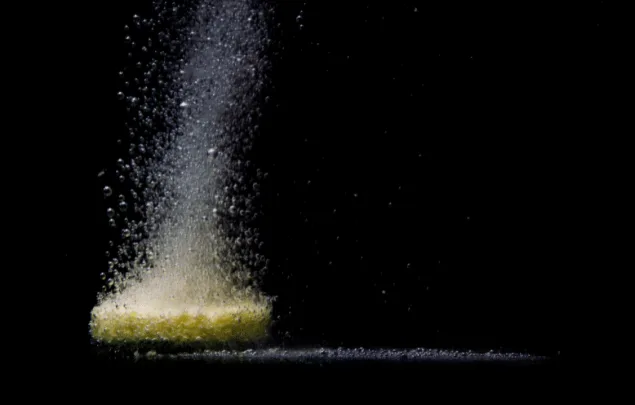
A unique solid dosage form, effervescent tablets dissolve quickly in water and release active ingredients in a fizzy solution. Often used for vitamins, supplements, and pharmaceuticals, these tablets allow for rapid absorption in the body. Their key feature (fast disintegration in liquid) is made possible by a combination of acids and carbonates that react when exposed to moisture.
This same reactivity, however, is also what makes effervescent tablets difficult to manufacture because these ingredients are highly sensitive to humidity. This can affect the tablet’s stability and result in fragility. Even miniscule amounts of moisture during production can cause premature reactions, meaning damaged tablets and wasted product. A carefully controlled process is required to achieve consistent tablet hardness, weight, and uniformity without damaging the active ingredients.
This is where the Stokes 720 rotary tablet press, paired with a dry lube system, becomes particularly valuable. With its strength and precision, the Stokes 720 has what it takes to produce effervescent tablets at scale, while dry lubrication minimizes friction and heat. When used together, this setup provides a clean, efficient, and reliable workflow that is especially suited for the needs of effervescent tablet production.
Manufacturing effervescent tablets comes with a unique set of challenges. These tablets require exact conditions, and any deviation can result in failed batches, waste, or compromised product quality. Below are the most common issues manufacturers face:
These challenges show why effervescent tablet manufacturing needs more than just standard equipment and processes. From punch and die wear to moisture sensitivity, each issue can affect tablet quality. To produce effervescent tablets reliably, manufacturers need a setup that minimizes friction, controls compression precisely, and avoids introducing moisture.
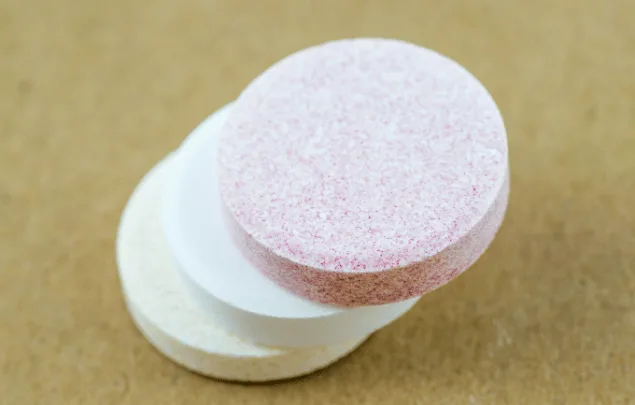
Effervescent tablets require a press that can deliver strong, consistent, and careful compression. The Stokes 720 rotary tablet press can meet those needs with a set of features designed for performance, flexibility, and efficiency in demanding production environments.
Effervescent tablets are often larger than standard tablets because they hold both active ingredients and effervescent agents. The Stokes 720 provides the compression strength needed to form these large tablets without capping, cracking, or lamination. It applies force evenly across the tablet surface, protecting brittle or reactive ingredients during compression.
Uniformity is important for effervescent tablets. The Stokes 720 allows precise control over fill depth and compression force, ensuring each tablet meets strict weight and hardness targets. This consistency supports accurate dosing and predictable disintegration in water.
Not all formulations respond well to fast, high-pressure compression. The Stokes 720 gives operators control over dwell time and punch speed, which is especially important for delicate or moisture-sensitive blends. Slower speeds and longer dwell times reduce mechanical stress on the formulation, improving tablet quality and reducing defects.
The Stokes 720 is built to keep up with large-scale production. It can handle continuous operation while still maintaining tight control over tablet specifications. For manufacturers producing effervescent tablets in bulk, this balance of speed and control is essential.
Effervescent products need a clean environment to avoid premature reactions. The Stokes 720 is engineered for quick disassembly and easy access, making cleaning and changeovers faster. This means less downtime and a reduced risk of cross-contamination.

Effervescent tablets react to moisture, so every part of the production line must minimize exposure to water-based substances; this includes how tooling is lubricated. Traditional tablet lubricants, such as magnesium stearate, are commonly used to prevent sticking and reduce friction. In effervescent tablets, however, these lubricants can cause more harm than good.
A dry lube system offers a better option and addresses several challenges:
From blending to packing, effervescent tablet production requires control at every stage. Below is a simplified workflow that shows how the Stokes 720 tablet press, paired with a dry lube system, fits into the process.
Ingredients like citric acid and sodium bicarbonate must stay dry and evenly blended.
Before beginning the production run, dry lubricant is applied directly to the tablet press tooling.
The blended powder is fed into the Stokes 720 press to be compressed into tablets.
Finished tablets are automatically inspected through force monitoring.
Depending on the product, tablets may move straight to packaging or go through coating first.
Once the production run is complete, the press is disassembled for cleaning.

Using the Stokes 720 with a dry lube system makes effervescent tablet production faster, cleaner, and more consistent.
The Stokes 720 handles high-volume production with ease. With reliable compression control and steady powder flow, it reduces the occurrence of halts in production. Dry lubrication also helps with this by preventing sticking or build-up on tooling.
Sticking, picking, and poor compaction are the leading causes of tablet defects. With dry lube and the Stokes 720’s consistent compression, these issues are less likely to happen. This means more high-quality tables per batch and less material waste.
Dry lube acts as a protective barrier, reducing friction and wear. Punches and dies stay in better shape for longer, which lessens replacement costs and unplanned maintenance.
Tooling changes and cleanup are faster when not dealing with oily or sticky residues. The dry lube system leaves almost no residue and the Stokes 720 can be disassembled, which means quicker turnarounds between production runs.
Effervescent tablet production demands strict control. By eliminating traditional lubricants and simplifying cleanup, this setup helps meet GMP and validation requirements. The more consistent the process, the easier it is to document and audit.
Not every manufacturing setup requires the extra care that effervescent tablets demand. But for the companies that do, combining the Stokes 720 with a dry lube system provides a reliable, scalable solution. Here’s who stands to gain the most:
Effervescent tablet production isn’t easy; but with the right equipment, it becomes a lot more manageable. The combination of the Stokes 720 tablet press and a dry lube system offers real advantages for companies that need precision, speed, and clean operation. Whether you’re producing supplements, pharmaceuticals, or launching a new effervescent product line, this setup helps reduce risks, improve output, and simplify compliance.
Ready to improve your effervescent tablet production?
Contact the tablet press experts at Stokes to find the right setup for your operation. We’re here to help you get better results with less hassle.
The formulation contains reactive ingredients (like acids and carbonates) that are sensitive to moisture. Even small amounts of humidity can trigger reactions prematurely, cause fragility, sticking, or batch failure. Also issues like tool wear, sticking & picking, and lubricant incompatibility make the process tougher.
It offers high compression strength and higher accuracy (fill depth, compression force) so large or fragile effervescent tablets can be formed without cracking or lamination. It also allows control over dwell time and speed, helping reduce stress on the formulation.
Traditional lubricants (e.g., magnesium stearate) may slow disintegration or react with the effervescent ingredients. The dry lube system applies lubricant only to tooling surface, minimizing impact on the blend and improving tablet finish. It also reduces contamination risk, protects tooling, and supports meeting regulatory disintegration standards.
You’ll get fewer tablet defects (sticking, picking, cracks), better uniformity in weight and hardness, faster changeovers (thanks to design features), and less downtime. The lubrication and tooling protection also extend tooling life.
Yes. Because effervescent tablets are moisture sensitive, packaging must protect from humidity (for example foil strips, blisters, desiccant tubes) to prevent premature reaction. Also the production environment must be controlled for humidity and the process must avoid introducing moisture.

Callie Scott is the Content and Technical Writing Manager at Operio Group. She has over a decade of experience in writing and communications, with the past six years dedicated to creating technical and marketing content for manufacturers in the solid dose space. She focuses on creating clear and engaging content for the industry, supporting multiple brands with writing on tablet presses, capsule filling machines, excipients, ingredient selection based on function and market trends, and formulation processes. Callie holds a Master of Arts in Technical Communication from Texas State University and brings a strong focus on clarity, accuracy, and real-world relevance in her writing.