Go Overhead-Free: Eliminate Scooping and Lifting in Tablet Press Powder Feeding
Powder feeding systems have an important part in tablet press performance. When those systems have overhead bins, platforms, or elevated loading points, they can cause challenges...
Powder feeding systems have an important part in tablet press performance. When those systems have overhead bins, platforms, or elevated loading points, they can cause challenges that impact safety, efficiency, and plant layout.
Upgrading a rotary tablet press with a vacuum powder transfer system provides a cleaner, more controlled alternative to move material without relying on gravity-fed overhead setups. This approach simplifies powder handling, reduces dust exposure, and allows operators to work entirely at floor level. This integration can help streamline operations while supporting safety and cleanliness goals.
Why Overhead Feed Systems Are Holding You Back
Many legacy tablet press setups rely on overhead powder feed systems, where material is stored in a bin or container positioned above the press and dropped into the feed frame via gravity. While this method can appear simple, it can introduce several operational, safety, and layout challenges that become more obvious as production demands increase.
Requires Operator Access to Elevated Platforms
Overhead systems often require ladders, stairs, or full platforms to load powder into the hopper. This increases fall risks, especially when lifting heavy bags or containers. In facilities with strict safety protocols, this can mean additional PPE, training, and time; this can ultimately slow down your workflow and increase compliance costs.
Increases the Risk of Dust, Spills, and Product Loss
Feeding from the top typically requires open containers or less-sealed interfaces, which raises the chance of powder spills. Fine powders can easily contaminate during dumping or transfer while also potentially creating dust hazards and product loss. Not only does this affect production yield, but it also introduces the potential for cross-contamination between batches or products.
Adds Time and Cost to Cleaning and Maintenance
Because the powder travels a longer, more exposed path, there are more surfaces and contact points that need to be cleaned. This is especially challenging in regulated environments where product changeovers must have full cleaning validation. Reaching elevated hoppers and disassembling long feed lines adds time, labor, and documentation steps to every batch change.
A Smarter Upgrade: Powder Transfer for Tablet Presses
Switching to a vacuum powder transfer system offers more than just convenience. It’s a practical improvement to tablet press operations. Manufacturers gain better control over material flow, simplify cleaning, and reduce strain on operators by removing overhead powder loading from the production process.
What a Vacuum Powder Transfer System Does
A vacuum powder transfer system is a sealed, automated system that transfers powder from a container directly into the tablet press hopper and feeder. Using negative pressure, the system draws powder through a stainless steel tube, keeping the transfer, clean, and controlled. Rather than manually lifting drums or climbing platforms to load powder material, operators connect the suction line to a container and start the transfer process with a button push.
This system eliminates the need for gravity-fed loading. This significantly reduces dust in the air and allows for much safer and faster material handling.
How a Vacuum Powder Transfer System Works with a Rotary Tablet Press Machine
When paired with a vacuum powder transfer system, a rotary tablet press is no longer dependent on overhead bins or hoppers. Powder is pulled into the hopper or directly into the feed frame using a controlled, time cycle. The transfer system can maintain a consistent fill level using built-in powder level sensors, which prevents interruptions in tablet production.
The system supports continuous operation by automatically refilling the press as needed, maintaining steady feed rates and minimizing downtime or overfills.
How a Vacuum Powder Transfer System Fits Into Existing Production Lines with Minimal Disruption
One of the biggest advantages of a vacuum powder transfer system is how easily it integrates with your existing equipment. There’s no need to redesign your production line or modify the tablet press; the transfer system connects externally and can be installed alongside the press without requiring additional structural support.
In most cases, the only adjustments that may be required involve hose routing and power setup. Because the system is compact and mobile, it can often be cleaned in place or disassembled tool-free for faster changeovers.
Benefits of Switching to a Vacuum Powder Transfer System
Upgrading your tablet press with a vacuum powder transfer system doesn’t just replace how powder is loaded; it transforms how your operation runs. From safety to product quality, the advantages are immediate and measurable. Here’s what you gain by switching:
- Improved Operator Safety: Eliminates the need for climbing stairs or platforms to load powder. Powder is handled at floor level, reducing the risk of lifting injuries and falls.
- Cleaner Operation: A closed-loop system contains the powder from container to press, minimizing dust, spills, and airborne contamination during powder transfer.
- Faster Changeovers: Powder transfer units are designed for easy disassembly, making cleaning between batches quicker and less labor-intensive.
- Reduced Cleaning Burden: Fewer contact surfaces and no overhead equipment mean less time spent cleaning and validating equipment after each run.
- Consistent Tablet Weight: Controlled, steady powder flow helps prevent feed interruptions and overfills, supporting better tablet uniformity and fewer rejects.
Vacuum Powder Transfer Systems are Designed for Today's Manufacturers
Particularly with complicated formulations or regulated environments, flexibility, precision, and strict process control are needed for tablet manufacturing today. Powder transfer systems are built to meet those expectations, supporting a wide range of materials and applications without compromising efficiency or compliance.
Handles a Range of Powder Types
Vacuum powder transfer systems are engineered to move more than just free-flowing granules.
They can reliably handle:
- Fine powders that are prone to dusting or bridging
- Granulated materials used in high-speed tablet production
- Moisture-sensitive blends that require minimal exposure to ambient air
The sealed nature of the system limits moisture pickup and prevents product segregation, which is especially important in formulations with active pharmaceutical ingredients or materials that vary in particle size.
Built for Pharma, Nutraceuticals, and Specialty Tablets
For items such as over-the-counter supplements, effervescent tablets, or highly potent pharmaceutical products, powder transfer systems can be adapted to specific process needs.
They help improve:
- Cleanroom compliance by keeping powder enclosed during transfer
- Batch consistency through controlled, metered feeding
- Operator safety in high-potency product environments
This flexibility makes powder transfer systems optimal for both continuous manufacturing lines and batch-based tablet production.

Supports Regulatory Compliance
For manufacturing under FDA and cGMP requirements, vacuum powder transfer systems offer a cleaner, more traceable material handling process.
Some of these features include:
- Closed transfer paths help prevent cross-contamination
- Tool-free disassembly enables easier cleaning and validation
- Documentation-ready components (such as tri-clamp fittings, stainless steel construction) make it easier to meet audit requirements
Vacuum powder transfer systems align with best practices for pharmaceutical and nutraceutical manufacturing. They can help reduce the number of steps to pass inspections or qualify equipment.
What to Look for in a Vacuum Powder Transfer System
To get the most out of your investment as well as to avoid disruptions during integration, it’s important to evaluate key technical and operational features before selecting a system.
Output Capacity
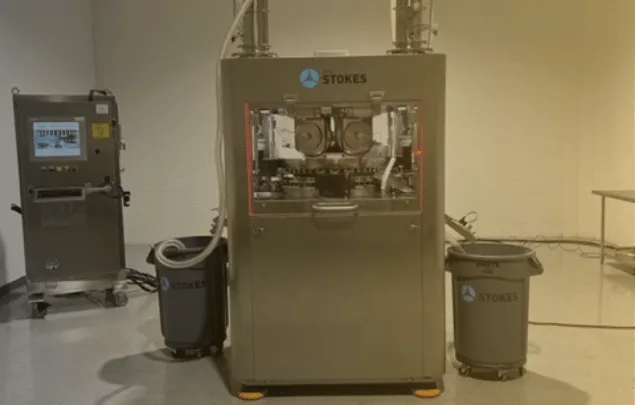
Choose a system that can match or exceed the production volume of your tablet press machine. For rotary tablet presses like the Stokes 720, this means a loader capable of delivering consistent feed rates over long production runs without interruption.
Look for:
- Stated transfer capacity in kg/hour or lbs/hour
- Max vertical and horizontal reach of the system
- Powder level sensing to automate refill cycles
- Adjustable timers or controls to fine-tune delivery rate
A mismatch in output capacity can lead to inconsistent powder levels in the hopper, causing tablet weight variation or production stoppages.
Clean-in-Place or Tool-Free Disassembly
Frequent cleaning is a must in regulated tablet manufacturing, particularly for facilities running multiple products. Choose a system that minimizes downtime during cleaning cycles.
Look for:
- Tool-free access to key components like filters, hoses, and contact parts
- Tri-clamp or quick-connect fittings for faster disassembly
- Clean-in-place (CIP) capability, if full disassembly isn’t ideal for your production
- Material compatibility with cleaning agents and hot water, if needed
Systems that are difficult to disassemble or clean can become bottlenecks during changeovers or increase the risk of cross-contamination.
Integration with Your Current Feeder or Press
A good powder transfer system should fit seamlessly into your existing tablet press setup without needing custom retrofitting or major layout changes.
Look for:
- Compatibility with your press’s hopper inlet size and location
- Flexible tubing or adjustable mounts to fit your layout
- Power and control systems that work with your facility’s infrastructure
- The option to integrate with existing level sensors or press control systems

Enhance Tablet Press Performance with a Smarter Powder Feeding Process
Vacuum powder transfer systems offer a direct way to improve how material is delivered to your tablet press machine. They simplify handling, reduce contamination risk, and improve consistency, without requiring changes to your press’s core function.
Extend the Life of Your Tablet Press Machine
Rather than replacing a tablet press machine to meet new safety or handling requirements, a powder transfer upgrade extends its capabilities. It improves efficiency and operator safety while maintaining the mechanical core of the press.
This tablet press retrofit helps you get more value from your existing investment, especially if your current setup is mechanically fine but limited by manual powder handling or overhead feed constraints.
Support Future Automation Goals
Powder transfer systems can be the first step toward a more automated, integrated production line. With programmable feeding cycles, level sensors, and compatibility with in-line mixing or blending systems, these units are designed to scale with your operation.
As automation becomes a greater focus in tablet manufacturing, especially for improving traceability and reducing human error, investing in a transfer system today can help prepare your facility for future upgrades without committing to a full line overhaul.
Next Steps
If you’re considering upgrading your tablet press with a powder transfer system, Stokes can help you plan the right solution for your operation.
- Talk to a Stokes specialist to discuss your current setup and integration options
- See how the Stokes Vacuum Powder Loader connects to tablet presses like the Stokes 720
- Request a quote or schedule an on-site assessment to evaluate fit, output requirements, and installation needs
Improving your powder handling process doesn’t have to mean replacing your equipment or changing your production facility. A targeted upgrade can make your existing tablet press cleaner, safer, and more efficient.
Vacuum Powder Transfer System in Tablet Presses FAQs
What problems come with overhead powder feed systems for tablet presses?
Overhead systems often need elevated platforms or ladders for loading. That introduces fall-risks when lifting heavy bags. Also open or elevated bins tend to produce more dust, spills and cleaning burden.
What is a vacuum powder transfer system and how does it work?
It’s a sealed automated system that draws powder through a hose or tube via negative pressure (vacuum) into the press hopper or feed frame — so you don’t have to lift or dump from above.
What benefits does switching to a vacuum system bring?
- Safer operator environment (no ladders or high lifts).
- Reduced dust and risk of contamination/spills.
- Easier cleaning and changeover because you eliminate long overhead feed paths and elevated hoppers.
- Better integration with the tablet press layout (floor-level feed, less structural support needed).
How hard is it to retrofit a vacuum powder transfer system onto an existing tablet press line?
According to the article, not very hard in most cases. It can often be installed externally, with hose routing and power connections being the main work — no full rebuild of the line or support structure required.
Does this system influence material flow or tablet quality?
Yes. Since the material path is shorter, sealed and controlled, you reduce defects from spillage, bridging or feed interruptions, which helps feed consistency and ultimately tablet quality.
Are there any specific maintenance or cleaning improvements?
Yes. Overhead systems require cleaning elevated parts, long feed paths and hoppers. With vacuum transfer and floor-level feed, there are fewer contact surfaces, simpler extraction and cleaning procedures, which saves time
What should I consider before switching to this system?
You should check:
-
That your existing press feed frame can accept connection to the transfer hose.
-
Floor space and hose routing are feasible.
-
The blend properties (fine powders, moisture sensitivity) and whether the vacuum transfer will suit them without segregation or damage.
-
The change-over and cleaning requirements: make sure the vacuum system meets your cleaning/validation needs.