
Effervescent Tablet Manufacturing Workflow: How the Stokes 720 and Dry Lube Systems Improve Efficiency
A unique solid dosage form, effervescent tablets dissolve quickly in water and release active ingredients in a fizzy solution. Often used for vitamins, supplements, and...
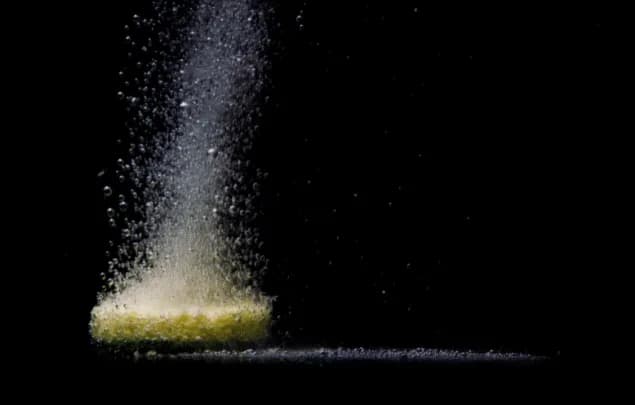
A unique solid dosage form, effervescent tablets dissolve quickly in water and release active ingredients in a fizzy solution. Often used for vitamins, supplements, and pharmaceuticals, these tablets allow for rapid absorption in the body. Their key feature (fast disintegration in liquid) is made possible by a combination of acids and carbonates that react when exposed to moisture.
This same reactivity, however, is also what makes effervescent tablets difficult to manufacture because these ingredients are highly sensitive to humidity. This can affect the tablet’s stability and result in fragility. Even miniscule amounts of moisture during production can cause premature reactions, meaning damaged tablets and wasted product. A carefully controlled process is required to achieve consistent tablet hardness, weight, and uniformity without damaging the active ingredients.
This is where the Stokes 720 rotary tablet press, paired with a dry lube system, becomes particularly valuable. With its strength and precision, the Stokes 720 has what it takes to produce effervescent tablets at scale, while dry lubrication minimizes friction and heat. When used together, this setup provides a clean, efficient, and reliable workflow that is especially suited for the needs of effervescent tablet production.

Common Challenges in Effervescent Tablet Production
Manufacturing effervescent tablets comes with a unique set of challenges. These tablets require exact conditions, and any deviation can result in failed batches, waste, or compromised product quality. Below are the most common issues manufacturers face:
- Sticking and Picking: Citric acid and sodium bicarbonate, common ingredients in effervescent tablets, are sticky and tend to cling to punches and dies. This can lead to surface defects, slows production, and causes tablet damage.
- Tooling Wear: High compression forces are required to bind the formulation into tablets. Over time, this can cause punches and dies to wear out faster, particularly without proper lubrication.
- Lubricant Incompatibility: Standard dry lubricants like magnesium stearate can affect effervescent tablet performance. They may slow disintegration or react with other ingredients.
- Humidity Sensitivity: Even a miniscule amount of moisture exposure can cause a reaction in tablets. Without the correct production environment, there is a risk of ruining entire batches.
These challenges show why effervescent tablet manufacturing needs more than just standard equipment and processes. From punch and die wear to moisture sensitivity, each issue can affect tablet quality. To produce effervescent tablets reliably, manufacturers need a setup that minimizes friction, controls compression precisely, and avoids introducing moisture.
The Role of the Stokes 720 Tablet Press in the Workflow
Effervescent tablets require a press that can deliver strong, consistent, and careful compression. The Stokes 720 rotary tablet press can meet those needs with a set of features designed for performance, flexibility, and efficiency in demanding production environments.
High Compression Strength and Large-Format Capability
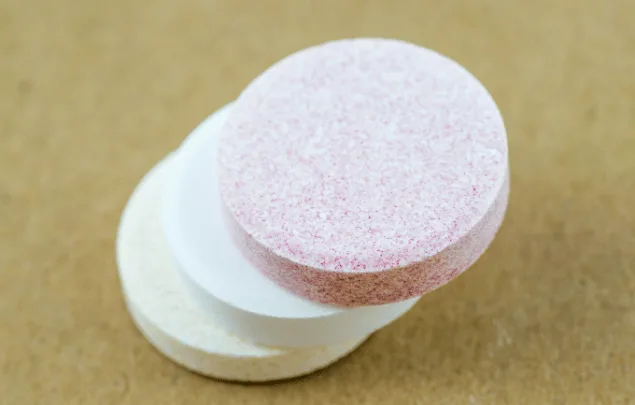
Effervescent tablets are often larger than standard tablets because they hold both active ingredients and effervescent agents. The Stokes 720 provides the compression strength needed to form these large tablets without capping, cracking, or lamination. It applies force evenly across the tablet surface, protecting brittle or reactive ingredients during compression.
Consistent Tablet Weight and Hardness
Uniformity is important for effervescent tablets. The Stokes 720 allows precise control over fill depth and compression force, ensuring each tablet meets strict weight and hardness targets. This consistency supports accurate dosing and predictable disintegration in water.
Adjustable Dwell Time and Punch Speed
Not all formulations respond well to fast, high-pressure compression. The Stokes 720 gives operators control over dwell time and punch speed, which is especially important for delicate or moisture-sensitive blends. Slower speeds and longer dwell times reduce mechanical stress on the formulation, improving tablet quality and reducing defects.
Designed for High-Volume Environments
The Stokes 720 is built to keep up with large-scale production. It can handle continuous operation while still maintaining tight control over tablet specifications. For manufacturers producing effervescent tablets in bulk, this balance of speed and control is essential.
Cleanability and Changeover Features
Effervescent products need a clean environment to avoid premature reactions. The Stokes 720 is engineered for quick disassembly and easy access, making cleaning and changeovers faster. This means less downtime and a reduced risk of cross-contamination.

How Dry Lube Systems Support Moisture-Sensitive Production
Effervescent tablets react to moisture, so every part of the production line must minimize exposure to water-based substances; this includes how tooling is lubricated. Traditional tablet lubricants, such as magnesium stearate, are commonly used to prevent sticking and reduce friction. In effervescent tablets, however, these lubricants can cause more harm than good.
A dry lube system offers a better option and addresses several challenges:
- Eliminates the Need for Traditional Lubricants: Effervescent tablets are designed to dissolve quickly in water. Many traditional lubricants can slow this process or even create residue in solution. Dry lube systems apply a solid lubricant directly to the tooling surfaces without blending it into the formulation. This can help avoid changes to disintegration time and ensures the effervescent reaction remains fast and clean.
- Reduces Contamination Risk: When you use a dry lube system, there’s less risk of cross-contamination between batches. Conventional lubricants often stay in mixing or feeding equipment and can carry over to the next run. Because they are more contained and easier to manage, dry lube systems can help maintain a clean, controlled production environment, particularly for reactive ingredients in effervescent tablets.
- Improves Surface Finish and Reduces Wear: Dry lubrication reduces metal-to-metal contact, which protects the tooling during compression. That means fewer scratches, smoother tablet surfaces, and extended punch and die life. Effervescent tablets benefit from surface protection because it helps protect quality across the batch, which must maintain both appearance and performance.
- Supports Compliance with Effervescent Tablet Standards (USP, EU): Regulatory bodies such as the United States Pharmacopeia (USP) and European Pharmacopoeia (Ph. Eur.) have specific standards for disintegration, pH, and purity in effervescent tablets. Using a dry lube system can assist manufacturers in meeting those standards by minimizing ingredients that could affect dissolution or trigger unwanted chemical fractions.
Step-by-Step Workflow using the Stokes 720 + Dry Lube System Setup
From blending to packing, effervescent tablet production requires control at every stage. Below is a simplified workflow that shows how the Stokes 720 tablet press, paired with a dry lube system, fits into the process.
- Powder Blend Preparation
Ingredients like citric acid and sodium bicarbonate must stay dry and evenly blended.
- Blending takes place in a humidity-controlled room or enclosed mixer.
- Anti-caking agents or flow enhancers may be added to improve powder movement.
- In many cases, granulation is used to improve flowability and reduce dusting.
- No liquid-based binders or lubricants are introduced at this stage.
- Tooling Prep with Dry Lube Application
Before beginning the production run, dry lubricant is applied directly to the tablet press tooling.
- The dry lube forms a thin, even barrier that reduces friction during compression.
- This method avoids introducing any lubricants into the blend itself.
- Tooling is checked for wear, scoring, or residue before operation.
- Compression Using the Stokes 720
The blended powder is fed into the Stokes 720 press to be compressed into tablets.
- Tablet thickness and fill depth are set based on the tablet size and blend characteristics.
- Tablet press speed and therefore dwell time are easily adjusted for optimal compaction without over-stressing the formulation.
- The machine’s stability allows for consistent performance across long runs.
- Tablet Ejection and Inspection
Finished tablets are automatically inspected through force monitoring.
- Tablets are checked for cracks, lamination, sticking, and weight variation.
- Because of the dry lube and smooth tooling surface, tablets typically have a clean finish and minimal defects.
- Post-Processing (Coating or Packing, If Needed)
Depending on the product, tablets may move straight to packaging or go through coating first.
- If required, effervescent tablets are coated in a material that must be moisture-permeable.
- Effervescent tablets are packed in foil strips, blisters, or desiccant tubes to keep out moisture.
- Cleaning and Changeover
Once the production run is complete, the press is disassembled for cleaning.
- The Stokes 720’s accessibility makes it easy to reach tooling and product-contact surfaces.
- Because dry lube leaves minimal residue, cleanup is quick.
- Changeover to the next product is simplified, helping reduce downtime.
- Older tablet presses can often be remanufactured or upgraded, especially for moisture-sensitive products.

What Real-World Efficiency Gains Can Be Expected?
Using the Stokes 720 with a dry lube system makes effervescent tablet production faster, cleaner, and more consistent.
Faster Throughput
The Stokes 720 handles high-volume production with ease. With reliable compression control and steady powder flow, it reduces the occurrence of halts in production. Dry lubrication also helps with this by preventing sticking or build-up on tooling.
Fewer Rejected Tablets
Sticking, picking, and poor compaction are the leading causes of tablet defects. With dry lube and the Stokes 720’s consistent compression, these issues are less likely to happen. This means more high-quality tables per batch and less material waste.
Longer Tooling Life
Dry lube acts as a protective barrier, reducing friction and wear. Punches and dies stay in better shape for longer, which lessens replacement costs and unplanned maintenance.
Less Downtime Between Batches
Tooling changes and cleanup are faster when not dealing with oily or sticky residues. The dry lube system leaves almost no residue and the Stokes 720 can be disassembled, which means quicker turnarounds between production runs.
Cleaner Process Leads to Easier Validation
Effervescent tablet production demands strict control. By eliminating traditional lubricants and simplifying cleanup, this setup helps meet GMP and validation requirements. The more consistent the process, the easier it is to document and audit.
Who Benefits Most from a Stokes 720 and Dry Lube System Setup?
Not every manufacturing setup requires the extra care that effervescent tablets demand. But for the companies that do, combining the Stokes 720 with a dry lube system provides a reliable, scalable solution. Here’s who stands to gain the most:
- Supplement Manufacturers: Effervescent tablets are popular in the supplement space for products like vitamin C, magnesium, and electrolytes. These formulations are often sensitive, require to be larger in tablet form, and need to quickly disintegrate in water.
- Pharmaceutical Contract Manufacturers (CMOs): CMOs need flexible equipment to handle multiple client formulations and could definitely benefit from this setup. The Stokes 720 can be quickly adjusted for different tablet sizes and formulas, while the dry lube system reduces cross-contamination risks and simplifies cleaning validation.
- Operations Teams Working in High Humidity Areas: In regions where ambient humidity is difficult to control, moisture-sensitive production becomes even more risky. The Stokes 720 and dry lube system setup helps mitigate this risk. Dry lube eliminates the need to introduce moisture-prone excipients, and the Stokes 720’s enclosed, stable operation minimizes exposure during compression.
- Companies Expanding into Effervescent Formats: Brands looking to diversify into effervescent delivery forms face a steep learning curve. This equipment pairing removes many of the early hurdles such as formulation instability, sticking, and regulatory challenges. It offers a dependable starting point for consistent, scalable production without having to redesign the entire manufacturing line.
Effervescent tablet production isn’t easy; but with the right equipment, it becomes a lot more manageable. The combination of the Stokes 720 tablet press and a dry lube system offers real advantages for companies that need precision, speed, and clean operation. Whether you're producing supplements, pharmaceuticals, or launching a new effervescent product line, this setup helps reduce risks, improve output, and simplify compliance.
Ready to improve your effervescent tablet production?
Contact the tablet press experts at Stokes to find the right setup for your operation. We're here to help you get better results with less hassle.
Effervescent Tablet Manufacturing and Dry Lube Systems FAQs
What makes effervescent tablets more challenging to produce than standard tablets?
The formulation contains reactive ingredients (like acids and carbonates) that are sensitive to moisture. Even small amounts of humidity can trigger reactions prematurely, cause fragility, sticking, or batch failure. Also issues like tool wear, sticking & picking, and lubricant incompatibility make the process tougher.
How does the Stokes 720 help in effervescent tablet production?
It offers high compression strength and higher accuracy (fill depth, compression force) so large or fragile effervescent tablets can be formed without cracking or lamination. It also allows control over dwell time and speed, helping reduce stress on the formulation.
Why is a dry lube system used instead of traditional lubricants in effervescent tablet manufacture?
Traditional lubricants (e.g., magnesium stearate) may slow disintegration or react with the effervescent ingredients. The dry lube system applies lubricant only to tooling surface, minimizing impact on the blend and improving tablet finish. It also reduces contamination risk, protects tooling, and supports meeting regulatory disintegration standards.
What are the key workflow steps when using Stokes 720 + dry lube for effervescent tablets?
- Prepare a dry, humidity-controlled powder blend (acid + carbonate + flow aids).
- Apply dry lubricant over tooling before the run. Inspect tooling.
- Set up the tablet press (fill depth, speed, dwell time) and run the press. Monitor weight, hardness, ejection.
- Perform inspection (look for cracks, sticking, weight variation).
- Clean & change over: disassemble tooling, clean surfaces; the Stokes 720 facilitates quick cleaning.
What benefits can a manufacturer expect when correctly using this setup for effervescent tablets?
You’ll get fewer tablet defects (sticking, picking, cracks), better uniformity in weight and hardness, faster changeovers (thanks to design features), and less downtime. The lubrication and tooling protection also extend tooling life.
Are there any special considerations for storage or packaging when producing effervescent tablets?
Yes. Because effervescent tablets are moisture sensitive, packaging must protect from humidity (for example foil strips, blisters, desiccant tubes) to prevent premature reaction. Also the production environment must be controlled for humidity and the process must avoid introducing moisture.